Inside the 2026 CX-5’s Quiet Cost Cuts Driven by Japan Tariffs
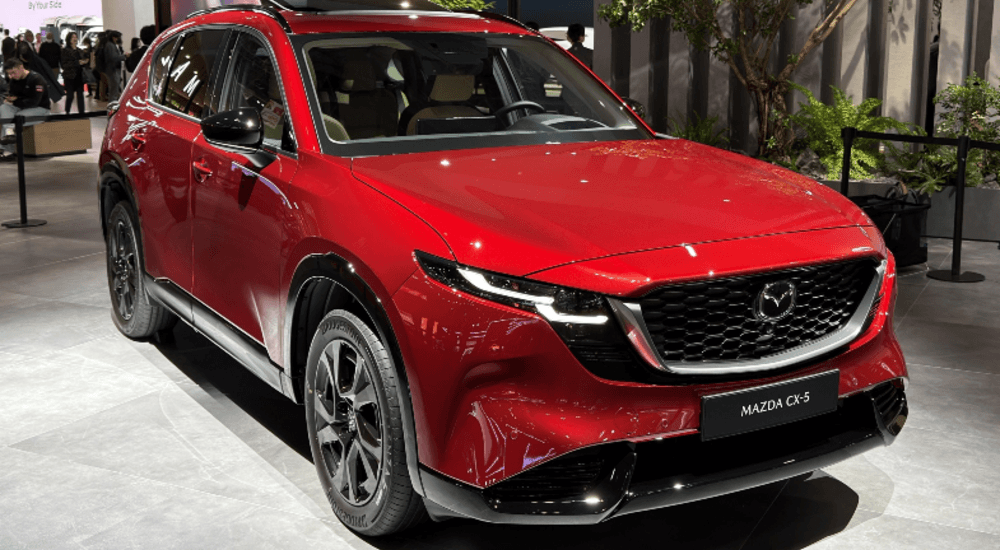
The redesigned 2026 Mazda CX-5 looks bigger, sharper, and more loaded with tech than the version it replaces, but under the skin, Mazda is quietly pulling pennies out of every panel, stitch, and button cluster it can. The reason isn’t mystery engineering. It’s a 15 percent U.S. import tariff that’s chewing through the automaker’s margins, and the fallout is landing directly in showrooms.
- A 15 percent U.S. tariff on Japanese vehicles is costing Mazda roughly $1 billion this fiscal year.
- The 2026 CX-5 hides cuts in places like steering wheel stitching and body structure to hold the line on price.
- The base model rises only $940 to $29,990, but other trade-offs like touchscreen climate controls are more visible.
Why Mazda Is Feeling the Tariff Squeeze
Mazda builds most of its U.S.-bound vehicles in Japan, which puts it squarely in the crosshairs of Washington’s trade policy. In September 2025, President Donald Trump imposed a 15 percent tariff on Japanese imports, down from 27.5 percent. That’s a relief compared to the earlier rate, but the math still stings. Mazda estimates total tariff costs of about Â¥162.5 billion (around $1 billion) this fiscal year, which is a real headache for a brand already dealing with slipping profits.
The financial picture explains the urgency. Operating profit dropped 32 percent to Â¥30.8 billion (about $209 million) in the quarter ending December 31, while net income fell 45 percent to Â¥30.6 billion. For the full fiscal year ending March 31, Mazda expects operating profit to sink 73 percent to Â¥50 billion, and net income to fall 82 percent to Â¥20 billion. With about 70 percent of its U.S. sales traditionally imported from Japan, Mazda can’t simply shift production overnight.
The Hidden Changes Buyers Won’t See
Rather than slap a big price hike on the CX-5, Mazda chose a quieter route. According to reporting by Automotive News, Mazda shaved a few cents off the production cost of the CX-5 by adjusting the stitching on its standard leather-wrapped steering wheel. On the 2025 SUV, the leather was sewn on a curve so the individual stitches would line up horizontally, while the 2026 CX-5 takes a simpler approach already used by most of its rivals. Its diagonal-sewn stitches are easier and cheaper to produce, and since it still uses the same quality of leather, most owners would never notice a difference.
Bigger savings came from the body itself. Despite being 4.5 inches longer and slightly wider and taller than the 2025 model, the 2026 CX-5’s body-in-white is both lighter and cheaper to produce thanks to a close partnership with Mazda’s supplier, Nippon Steel. CFO Jeffrey Guyton described the steering wheel and body work as just two of “many, many, many” changes made to the 2026 CX-5 that will reduce production costs.
The Cost Cut You Will Notice
Not every change flies under the radar. The new CX-5 does without physical climate controls, with the HVAC system moved to the touchscreen. It’s easier and cheaper to code those features into a display than to design and manufacture a button cluster. Shoppers who’ve driven cars with all-screen HVAC know the compromise, and this is the sort of decision that can color a long-term ownership experience more than a few shifted stitches.
Even so, Mazda held the sticker increase to a number most shoppers can stomach. The redesigned 2026 CX-5 starts at $29,990, a reasonable $940 bump from last year and a healthy two grand less than the base RAV4. Also available are the 2.5 S Select at $31,990, the 2.5 S Preferred at $34,250, the 2.5 S Premium at $36,900, and the 2.5 S Premium Plus at $38,990.
What This Means for Shoppers Right Now
For buyers walking into Mazda dealers this spring, the 2026 CX-5 is a case study in how tariffs reshape a car without rewriting its spec sheet. You’re getting a roomier SUV with a larger screen, Google connectivity, and eventually a new Skyactiv-Z hybrid option. You’re also getting diagonal stitching, touchscreen climate settings, and a body structure engineered to cost less to weld together.
U.S. sales dipped 3.3 percent in 2025 after a record year in 2024, and according to Tom Donnelly, CEO of Mazda North American Operations, the focus now is on improving throughput, profitability, and volume. Mazda isn’t alone in this fight. Subaru, which has factories in Japan and America, reported an operating loss of $233 million in 2025 tied to tariffs. The carmaker has taken a different route to deal with them, though, by making its Forester and WRX cheaper.
Shopping Smart in a Tariff-Inflated Market
If you’re cross-shopping compact SUVs right now, the CX-5 still looks like a strong value on paper, and the price restraint is genuinely impressive given the circumstances. Just go in with eyes open. Sit in the car, work the touchscreen, feel the materials, and decide whether the invisible trims add up to anything you’d miss. Tariff pressure isn’t going away soon, and every Japanese-built vehicle on a U.S. lot is telling some version of the same quiet story.
This post may contain affiliate links. Meaning a commission is given should you decide to make a purchase through these links, at no cost to you. All products shown are researched and tested to give an accurate review for you.