What the New Federal Child Car Seat Side-Impact Rule Means for Families and Makers
Federal safety officials just locked in a set of changes to how child car seats handle side-impact protection, and the headline shift is a later compliance deadline. The updated rule reshapes testing, timing, and school bus seats all at once.
- The side-impact compliance date for child restraints moves from June 30, 2025 to December 5, 2026.
- The rule will exempt school bus child restraints from the side-impact standard if they meet its labeling requirements.
- A specific infant test dummy will no longer be used to test forward-facing seats.
Why the Deadline Moved
On September 9, 2026, the National Highway Traffic Safety Administration published a final rule that touches three related standards for child restraint systems. The core action amends FMVSS No. 213a, the standard covering side-impact protection, while making matching tweaks to FMVSS Nos. 213 and 213b. The rule becomes effective October 9, 2026, but the deadline manufacturers actually have to meet for side-impact certification lands separately on December 5, 2026.
Smaller car seat companies pushed for more time, and their argument came down to testing capacity. Unlike the biggest brands, small manufacturers usually don’t run their own crash labs. They rely on outside facilities for sled testing, and those facilities got crowded. Companies reported inconsistent results between labs and long waits for available sled time, which stretched out the work of proving a design meets the standard.
The group asking for relief warned that without an extension, they’d have to stop making some models and delay others. That would thin out the number of seats on shelves and could push prices up. Regulators agreed the risk to competition was real. If small makers were forced out, families would have fewer choices. Moving the date to December 5, 2026 lines it up with the compliance date for FMVSS No. 213b, so the two standards now share one deadline.
Not everyone was on board. Two larger manufacturers, Dorel and Graco, opposed the delay. Both said most of their applicable products already meet the side-impact requirements, and they argued a later date rewards companies that fell behind while penalizing those that invested early. Regulators acknowledged that companies already in compliance keep a competitive edge and still provide the safety benefits their improved seats provide.
School Bus Seats Get an Exemption
A big piece of this rule carves out school bus child restraints. These seats work differently from the ones in your car. They attach to the bus seat using a seat back mount rather than the lower anchor system found in passenger vehicles, and many have no shell to guard against a side hit. The side-impact test simulates a near-side crash of a small passenger car, which doesn’t match the crash environment of a school bus.
Because these restraints couldn’t realistically meet the side-impact standard, the makers behind products like the STAR child restraint said they’d have to halt U.S. production. That would ripple into Head Start programs and daycares that depend on them. The rule will exempt school bus restraints from the side-impact requirements and from the lower anchor attachment rules, provided they carry labels showing how they’re meant to be secured. Those labeling updates have separate deadlines: December 5, 2026 under FMVSS No. 213b and December 8, 2026 under FMVSS No. 213.
A Change in Crash Test Dummies
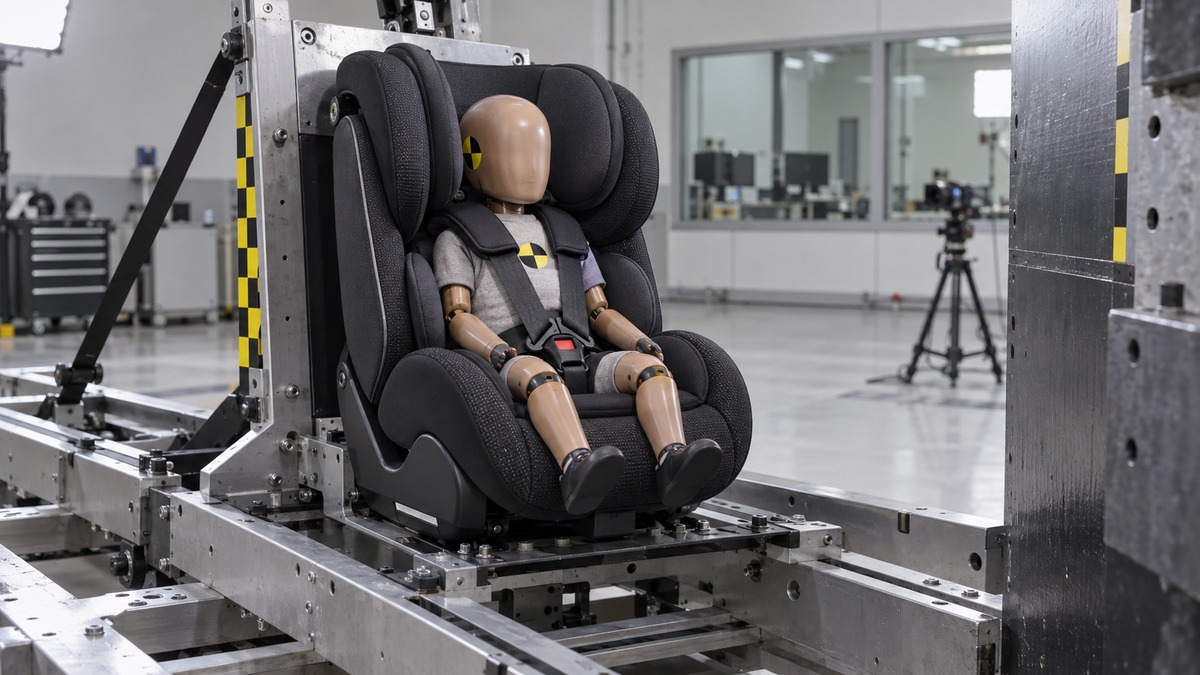
The rule also drops the CRABI 12-month-old dummy from side-impact testing of forward-facing seats. Recent updates already bar makers from recommending forward-facing seats for children under 12 kilograms, roughly 26.5 pounds, and that infant dummy represents a smaller child. Testing a seat in a setup nobody is allowed to recommend didn’t make sense. NHTSA estimates that removing this test will cut annual testing costs by about $1.29 million without affecting safety.
What Parents Should Watch For
For families, the practical takeaway is simple. Manufacturers can comply early, and many big brands already do, so plenty of certified side-impact seats are on the market right now. Parents can check the manufacturer’s compliance information for a particular seat. NHTSA expects a large portion of the benefits projected for the 2022 standard, 3.7 lives saved and 40.9 serious injuries prevented annually, to remain because most large manufacturers are already certifying their products to it. Anyone wanting to challenge the rule has until October 26, 2026 to file a petition for reconsideration.
This post may contain affiliate links. Meaning a commission is given should you decide to make a purchase through these links, at no cost to you. All products shown are researched and tested to give an accurate review for you.