NHTSA Studies Driver Monitoring for Future Rules
Why a 48-Person Simulator Test Could Steer the Future of Car Safety Tech
Federal regulators are quietly running an experiment that might decide what your next car watches while you drive. NHTSA just opened a window to study how cameras and sensors can spot a drowsy or distracted driver, and the results could push the whole industry toward smarter attention-tracking tech in the years ahead.
- NHTSA filed a notice on June 10, 2026, to study contextual driver-attention technology, with public comments open until August 10, 2026.
- The plan calls for 48 volunteers to run four ten-minute drives in a simulator, facing staged hazards and a final crash-avoidance scenario.
- The research traces back to a 2021 law that told NHTSA to require impaired-driving prevention tech in new passenger vehicles.
What NHTSA Is Actually Testing
On June 10, 2026, the National Highway Traffic Safety Administration posted a notice and request for comments tied to a planned research project. The goal is to build and evaluate a prototype “contextual” attention system that pulls together different kinds of data, including visual cues, physical signals from the driver, and information about what is happening outside the car. The agency wants two answers. Does the technology work, and will real drivers accept it?
That second question matters more than it sounds. Safety tech only helps if people leave it switched on and trust what it tells them. So the study is built to measure both performance and patience.
Conventional Versus Contextual
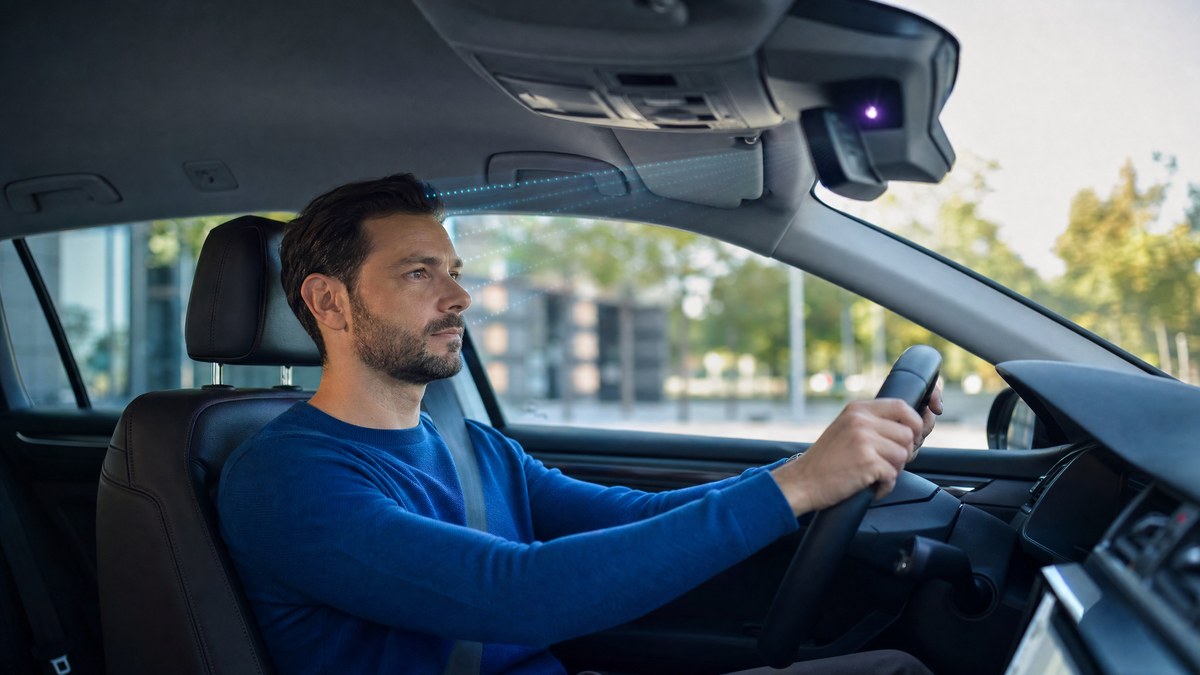
The hardware behind this idea is already familiar. A driver-facing camera sits in the dashboard and uses LED light to “see” a face, checking whether the person behind the wheel is awake and looking at the road. If the system spots a distracted or tired driver, it fires off audio and visual alerts to pull attention back to the road.
A basic version watches two things, where your eyes point and how your head is positioned. The contextual version goes further. On top of gaze and head pose, it factors in the driver’s heart rate, how the vehicle is being handled, and whether the driver is actually glancing at hazards as they appear. The contextual setup is what NHTSA wants to put through its paces, checking whether driver monitoring systems that layer in more signals give a sharper read on attention than the basic kind.
Inside the Simulator Study
The setup is small but specific. NHTSA plans to recruit 48 participants from the public. Each must be at least 18, hold a valid license, and drive at least 3,000 miles a year. Accepted volunteers run four drives in a simulator, each one about ten minutes, using either the conventional or the contextual setup at typical highway speeds.
The first three drives each include one of three safety-relevant events dropped in at random points. The fourth drive raises the stakes with a safety-critical scenario that forces the driver to react, such as braking hard to avoid a collision. To keep things realistic and a little stressful, participants also handle a side task, reading number strings off a nearby tablet, so researchers can see how the system holds up when attention is split.
Measuring Trust, Not Just Detection
After every drive, participants fill out a questionnaire rating the system on usefulness, annoyance, predictability, timing, and accuracy. Once all four drives wrap, another survey digs into how comfortable they felt being watched and whether they would want this in their own car. Then they watch videos comparing the two approaches across different situations and rate each one again. A debriefing session closes things out.
NHTSA pegs the total time burden at 132 hours. The only cost volunteers are expected to cover is travel to the research site in the Washington, DC area. It is a modest project on paper, but the design is clearly built to produce data regulators can lean on later.
Why Drivers and Dealers Should Pay Attention
This work did not appear out of nowhere. The 2021 Infrastructure Investment and Jobs Act told NHTSA to write a federal motor vehicle safety standard requiring advanced drunk and impaired driving prevention technology in passenger vehicles. That standard still has not been finalized, and this study is one more step toward meeting the mandate. A single 48-person test will not write the rules by itself, but it feeds the evidence pile that future rulemaking depends on. Anyone watching where vehicle tech is headed would do well to track what comes out of it, since the comment window closing on August 10, 2026, is the public’s chance to weigh in before the science hardens into policy.
This post may contain affiliate links. Meaning a commission is given should you decide to make a purchase through these links, at no cost to you. All products shown are researched and tested to give an accurate review for you.